Nobody to Blame: What a Solo Summit Actually Teaches You
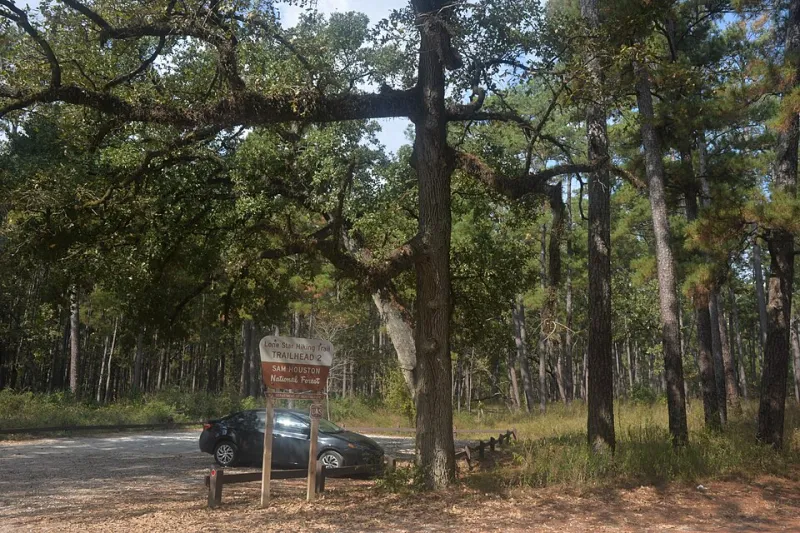
Photo: William L. Farr, CC BY 4.0, via Wikimedia Commons
The soloist in the car park
There's a moment, in every hill car park, when a solo walker boots up next to a group of eight and feels slightly self-conscious about it. Everyone else is laughing and adjusting straps. You're doing the same thing, quietly, on your own.
Some people assume that solo walker is after something dramatic — a personal challenge, a bit of Eat Pray Love on a windswept ridge. Mostly they aren't. They're there because they wanted to walk that hill today and the calendar didn't line up with anyone else's.
But something does happen out there on your own. Something worth doing at least once, whatever kind of hillwalker you are.
What actually happens when you go alone
The first thing you notice is the noise going away. Not the wind — the social noise. In a group, the day is shaped by conversation: who's slowing, who's pushing on, whether the plan is still the plan. Alone, you have to notice things instead. Weather. Time. Your own legs. The way the cloud is building behind the ridge and whether that's a five-minute shower or a proper turn.
And then the decision-making starts. Small ones, constantly. Do I take the path or the short cut? Do I stop now or push to the col? Do I eat here or wait? Should I have turned around ten minutes ago?
On a group walk, a lot of that gets done by whoever's got the map or the loudest personality. On your own, every call is yours, and you live with the outcome immediately. That's the education. That's the whole point.
Confidence isn't what you think it is
There's a version of hill confidence that looks like enthusiasm and bold decisions. It isn't that.
The confidence you build walking alone is duller and much more useful. It's the confidence to turn around when the weather closes in without feeling you've let somebody down. It's being comfortable standing still on a contour, working out where you actually are, instead of walking fast in the hope it'll become obvious. It's knowing which of your own excuses you tend to make when you're tired.
You can learn this in a group, but it takes longer, because there's always a chance to defer to someone else. Alone, the buck stops with the person in the boots.
The honest bit: the risks are real
I'm not going to dress this up. Solo walking carries risks that group walking doesn't.
An ankle injury on a group day is a nuisance. Alone, on a remote hillside with no signal, it's a serious problem. You're the only person who can call the day off, the only person expected back at the car, and the only one who knows the route.
That's why nobody should read this as a dare. Anyone advocating solo walking without a serious risk conversation is being negligent, not inspiring.
A sensible ladder for your first solo
You don't need to start with a remote ridge in a winter whiteout. Start with a hill you already know.
- Pick somewhere you've walked before. Familiarity removes one whole variable and lets you focus on the new thing, which is being responsible for yourself.
- Go short. A two-hour round trip with a clear path is a perfectly good first solo summit. You're not proving anything.
- Leave a plan. Tell someone your route, your car location and a hard time you'll be back. It's not optional.
- Bail early and often. Give yourself permission, in advance, to turn around for any reason at all. The hill will still be there.
- Carry the boring kit. Headtorch with fresh batteries, a proper waterproof, spare layer, food beyond what you need, and a power bank. And a paper map, because phones die.
- Check the forecast and the daylight. Solo days go wrong fastest when time pressure is added to small problems.
- Pick a busy hill first. Popular paths mean other people, which is a sensible safety net while you work out your own judgement.
Build up from there. A bigger day, then a familiar route in more interesting weather, then something new. Nobody sensible goes from the sofa to the Cuillin on their first solo outing.
The quiet after the summit
Here's the part that surprised me most. Soloing a hill doesn't feel triumphant. It feels quiet. You get to the top, you look at the view, you eat something, and there's nobody to tell you which bit is best. You just stand there and take it in, at the exact pace you want to take it in.
Then you walk down, carefully, because nobody's going to carry your pack or fetch the car.
That descent is the real lesson. Judgement gone tired, on a hill where you alone are responsible for the outcome, is a very good way to learn how much your decision-making changes when you're knackered. It's a lesson most people only learn the hard way, and it's far cheaper to learn on a 600m hill in ordinary weather than on something serious.
Go on then
A solo summit isn't a statement about being hard. It's a practical skill, like map-reading or knowing when to put a waterproof on before you get wet.
Do it with an honest plan and a route you can bail from, and you'll come back with something the group chat can't give you: a proper understanding of what you do out there when there's nobody else to make the call.