In Defence of a Soaked Summit: The Case for Walking in Filthy Weather
Photo: Bureau of Land Management, Public domain, via Wikimedia Commons
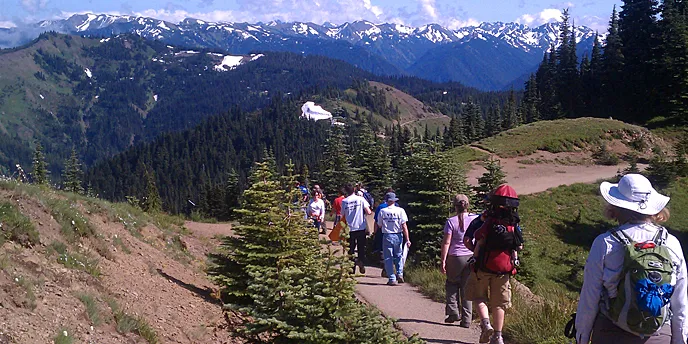
Scroll through any hillwalking feed and you'll spot the pattern: golden light, crisp ridgelines, a smug selfie against a horizon stretching for miles. Lovely, isn't it? Also, statistically, a lie.
Britain's hills spend most of their year under cloud. The Lake District gets over 200 rainy days annually. Snowdonia's summits are in cloud for the majority of the year. And yet we've built an entire culture around pretending that's a problem.
Here's my heretical position: the sunny summit selfie misses the point of British hillwalking entirely. The rain isn't the obstacle. It's the whole show.
Mist Is the Best Special Effect Britain Owns
I've stood on Stanah Edge in blazing sunshine and thought, yeah, nice. I've stood on it in driving mist with the world reduced to twenty metres of heather and the sound of my own breathing, and felt something closer to religion.
Cloud inversions are the obvious example — everyone now knows the magic of standing above a valley filled with white. But the subtler gifts of foul weather are less Instagrammable and more real. A ridge that appears and vanishes. Rain clearing in one direction only, so half the view glows while the other half stays hidden. The absolute silence of a popular trail that nobody else could be bothered with.
Empty trails are the secret currency of the bad-weather walker. Try Helvellyn's Striding Edge on a wet Tuesday in November and you'll have one of Britain's most celebrated ridges entirely to yourself. Try it in June sunshine and you'll be queueing.
The Gear That Actually Matters
The reason people hate wet weather walking is simple: bad waterproofs. Once your kit works, the rain becomes scenery rather than suffering.
The jacket. This is where you spend the money. Look for a 3-layer membrane jacket — the Rab Latok, Montane Alpine Pro or (if you've won the lottery) a Paramo, which handles sustained Scottish rain better than anything else. Ignore fashion; a £300 jacket that keeps you dry for a decade is cheaper than three £100 jackets that don't.
Trousers. Side zips are non-negotiable. You want to pull them on over boots in a horizontal hailstorm without removing your shoes. Berghaus and Rab both do the job for under £150.
Feet and hands. Waterproof socks divide opinion, but SealSkinz have converted many a sceptic. Sealskin gloves for the shoulder months. And a proper map case or a phone in a genuine waterproof pouch — because navigation in the wet is where the real skill lives.
The unglamorous truth: synthetic insulation beats down in British damp, and a big hood that fits over a hat beats a trim, pretty one every time.
Hills That Shine When Skies Don't
Some routes genuinely improve in grim weather. Grassy, well-defined paths become wonderlands rather than navigational ordeals.
- The Fairfield Horseshoe (Ambleside): a clear grassy ridge that holds its line in mist, with a pub at the end.
- Conic Hill to Balmaha (Loch Lomond): short, dramatic, and spectacular when the loch steams.
- Pen y Fan via the Storey Arms: the motorway path means zero navigation stress, and the summit in cloud feels properly arctic.
- The Cheviots: England's most underrated hills are arguably better in weather — big skies, no crowds, and bog that's wet regardless.
Teach Them Early
If you walk with kids, this matters double. A child who learns that rain is just "weather for splashing" becomes an adult who never cancels a walk. Pack hot chocolate in a flask, promise a chippy on the way home, and let them jump in every puddle. The family that walks in the rain owns the hills the fair-weather crowds abandon.
The sun will come out eventually. It always does. But the walkers who are already out there — soaked, grinning, completely alone on a ridge — they're the ones having the better day.