Bagging Peaks Against the Clock: Britain's Timed Hill Challenge Boom
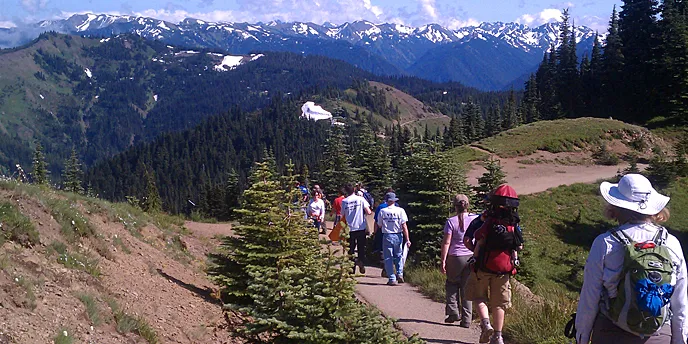
Photo: Olympic National Park, Public domain, via Wikimedia Commons
Somewhere in Yorkshire this summer, several thousand people will set off from a field in Horton-in-Ribblesdale before dawn, bound for the tops of Pen y Fan... no, wait — Ingleborough, Whernside and Pen-y-ghent, the Yorkshire Three Peaks, inside twelve hours. It's one of the best-known timed challenges in the country, and it sits at the centre of a debate that divides the hillwalking community: is racing up mountains a celebration of the outdoors, or a bit of an insult to it?
How Did We Get Here?
The timed hill challenge has exploded. What started with the Three Peaks — and its big brother, the National Three Peaks of Ben Nevis, Scafell Pike and Snowdon in 24 hours — has spawned a whole ecosystem of imitators: Lakeland rounds, Welsh 3000s pushes, and a growing roster of charity events that string together a daunting number of summits in a single weekend.
The appeal is obvious. A deadline gives you a training goal. A big number gives you a story. And finishing — genuinely finishing, legs wrecked, blisters bloomimg — delivers a sense of achievement that a gentle Sunday stroll rarely matches.
But the critics have a point too.
The Case Against the Clock
Ask any hill purist and they'll tell you the same thing: mountains aren't a gym. Turning them into a stopwatch course brings problems.
The erosion issue. Concentrated footfall from thousands of paired feet, many belonging to people who've never walked on proper ground before, chews up paths and the ground either side of them. Popular challenge routes show visible scarring.
The parking problem. Challenge events funnel enormous numbers of cars into small villages that exist to serve sheep, not minibus convoys. Horton-in-Ribblesdale has been vocal about this for years.
The rescue problem. Fast-pushing, underprepared participants are a known strain on mountain rescue teams, who are volunteers. Every avoidable callout is someone's weekend given up.
The experience problem. This is the philosophical one. When you're focused on splits and summit times, do you actually see the hill? The curlew on Whernside's slopes doesn't care about your Strava segment.
The Case For
And yet. Defenders of timed challenges — and I have some sympathy here — argue that they're a gateway drug. Plenty of people who'd never set foot on a hill get pulled in by a charity challenge with mates, discover they love it, and become lifelong walkers, and even MR volunteers themselves, because of it.
Done responsibly, a timed challenge is just hillwalking with structure. The clock doesn't stop you looking at the view — it just gives you a reason to earn it.
So, Is It Doable?
For a reasonably fit adult, yes — with proper preparation. Here's the honest checklist:
- Build a base, not a bolt-on. Three months minimum of regular walking, building to back-to-back long days. If you can't comfortably do 15 miles with 1,000m of ascent, you're not ready.
- Train your downhill. Everyone trains the ups. The quads that fail on challenge day are the ones hammered by descents.
- Sort your feet early. Socks, tape, properly worn-in boots. Blisters end more challenges than fitness does.
- Respect the event. Choose organised, well-run challenges with marshals, checkpoints and a cap on numbers — not a DIY dash that dumps your parking and your problems on a rural community.
- Know when to quit. A DNF isn't failure. Pushing through a knee injury to save your medal is how you end up in a stretcher.
The Verdict
Timed challenges aren't the enemy of hillwalking — carelessness is. If you train properly, pick a responsibly run event, and leave the hills exactly as you found them, then yes: bag those peaks against the clock. Just make sure you look up occasionally. The mountains have been there for millions of years; they'll still be there when your watch stops.
And if you're bringing the family along to support? Let them cheer at the finish — then take them up the same hill the following weekend, slowly, with a picnic. Both things can be true.