Small Hills, Big Ambitions: Why Your Winter Should Be Spent on the Modest Stuff
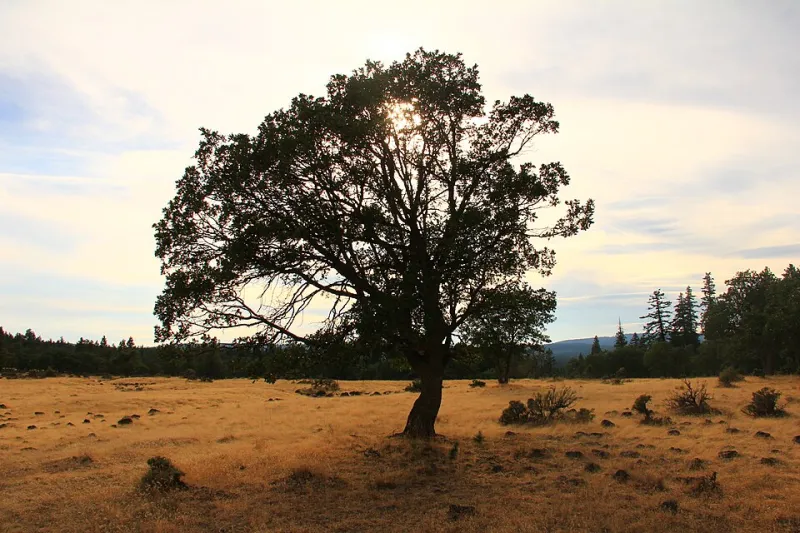
Photo: BLM Oregon & Washington, Public domain, via Wikimedia Commons
Every January, social media fills up with the same ritual: people declaring this the year they'll finally tick off the big ones. Snowdon in a day. The Yorkshire Three Peaks. Maybe, if they're feeling brave, a first Munro.
Then February happens. It's dark when you finish work, the nearest proper mountain is three hours away, and the running shoes go back in the cupboard by the first week of March.
Here's the thing the summit chasers with staying power understand: winter isn't the off-season. It's the build. And the build doesn't happen on Ben Nevis — it happens on the scruffy little hill fifteen minutes from your front door.
Why Small Hills Punch Above Their Weight
There's a temptation to think that training for mountains requires mountains. In reality, what makes you a stronger hillwalker is repetition, consistency and load — none of which care about altitude.
A 300-metre hill climbed four times with a weighted pack gives you more productive work than a single slog up a 900-metre peak, because you can control the intensity, practise your pacing and actually recover between efforts. You also learn how your body responds to cold, wind and sloppy ground — the exact conditions that humble people who've only ever walked in fair weather.
We spoke to Tom Ainsley, a strength and conditioning coach based in Sheffield who spends his weekends in the Peak District. His verdict on winter training is blunt: "Most people who struggle on big mountain days aren't unfit — they're underprepared. They've got engine but no chassis. Repetitive climbing on smaller hills builds the specific strength in your calves, quads and hips that a gym never quite replicates. And crucially, it teaches you to move efficiently on descents, which is where most people actually fall apart."
Six Unfashionable Hills Worth Repeating
You don't need my list — the hill nearest to you will do. But if you're stuck for inspiration, here are six modest lumps that earn their keep:
1. Werneth Low, Greater Manchester (433m) — Steep tracks straight off the edge of Hyde, brutal on the calves, and a proper weather funnel when the west winds blow. You can be up and down in 90 minutes and do it three times before lunch.
2. Pole Bank and the Long Mynd, Shropshire (516m) — The Carding Mill Valley paths offer relentless, repeatable gradient with easy access from Church Stretton. The steep gulleys off the plateau are superb descent practice.
3. Liddington Castle, Wiltshire (277m) — Ridgeway country. Soft underfoot, exposed to the wind, and perfect for long steady efforts with a pack. The white horse views help on grim days.
4. Roseberry Topping, North Yorkshire (320m) — Small but savagely steep. Multiple ascents here are a genuine leg workout, and the Cleveland weather gives you a proper taste of what bigger hills will throw at you.
5. Malvern Hills — Worcestershire Beacon (425m) — A 13-kilometre ridge you can treat like a poor man's traverse. Endless ups and downs, no escape routes mid-ridge, and it holds the wind like a wind tunnel.
6. Arthur's Seat, Edinburgh (251m) — For city dwellers, there's no better lunchtime weapon. The direct routes up the collapsed volcano are short, steep and busy enough that you'll never feel genuinely remote — ideal for safe winter repetitions.
The 12-Week Winter Build
Tom's progression plan is deliberately simple. "Complexity kills adherence," he says. "Twelve weeks, three sessions a week, and you arrive in spring with a body that's ready rather than a body that's hoping."
Weeks 1–4: Rebuild the base. Two brisk 45-minute walks a week on local hills or parkland with 200–300m of ascent, plus one session of stair repeats — park bench steps, a multi-storey car park, a steep path, anything. Add a basic strength routine twice a week: step-ups, split squats, calf raises and dead bugs. Boring? Yes. Effective? Also yes.
Weeks 5–8: Add load and repetition. Increase one weekly session to repeated ascents of your chosen hill — up and down, three to four times, wearing a daypack with 5–6kg inside. Keep the pace conversational on the climbs. This is where pacing discipline gets hard-wired. Drop the stair sessions to fortnightly and keep the strength work going.
Weeks 9–12: Simulate the real thing. One long session a week — three to four hours on your local hills with 8–10kg in the pack, ideally on consecutive days once or twice to teach your legs recovery under fatigue. Add one shorter, faster hill session and one strength session. By week 12, book the big day. A dry-ish spring weekend on a proper mountain will feel like a reward, not a shock.
Judgement Is a Muscle Too
Here's the part the training plans miss: winter on small hills is also where you learn to read conditions. Navigating in clag on a 300-metre hill teaches you the same skills as navigating on a 900-metre one, with a fraction of the consequence. Deciding whether to turn back because the wind is getting silly? Better to practise that decision on Roseberry Topping than on the Carneddau.
So this winter, stop apologising for the small stuff. Climb the humble hill near you, again and again, in weather that would put most people off. Come spring, when the big summits emerge from the murk, you won't just be ready — you'll be dangerous.
Chase the small ones now. The big ones are waiting.